

Let’s Live Now
Rachel Hollander’s blog on mindful living:
Support for your self-healing from chronic pain & neuroplastic disorders
and for ongoing wellness of mind, body & spirit
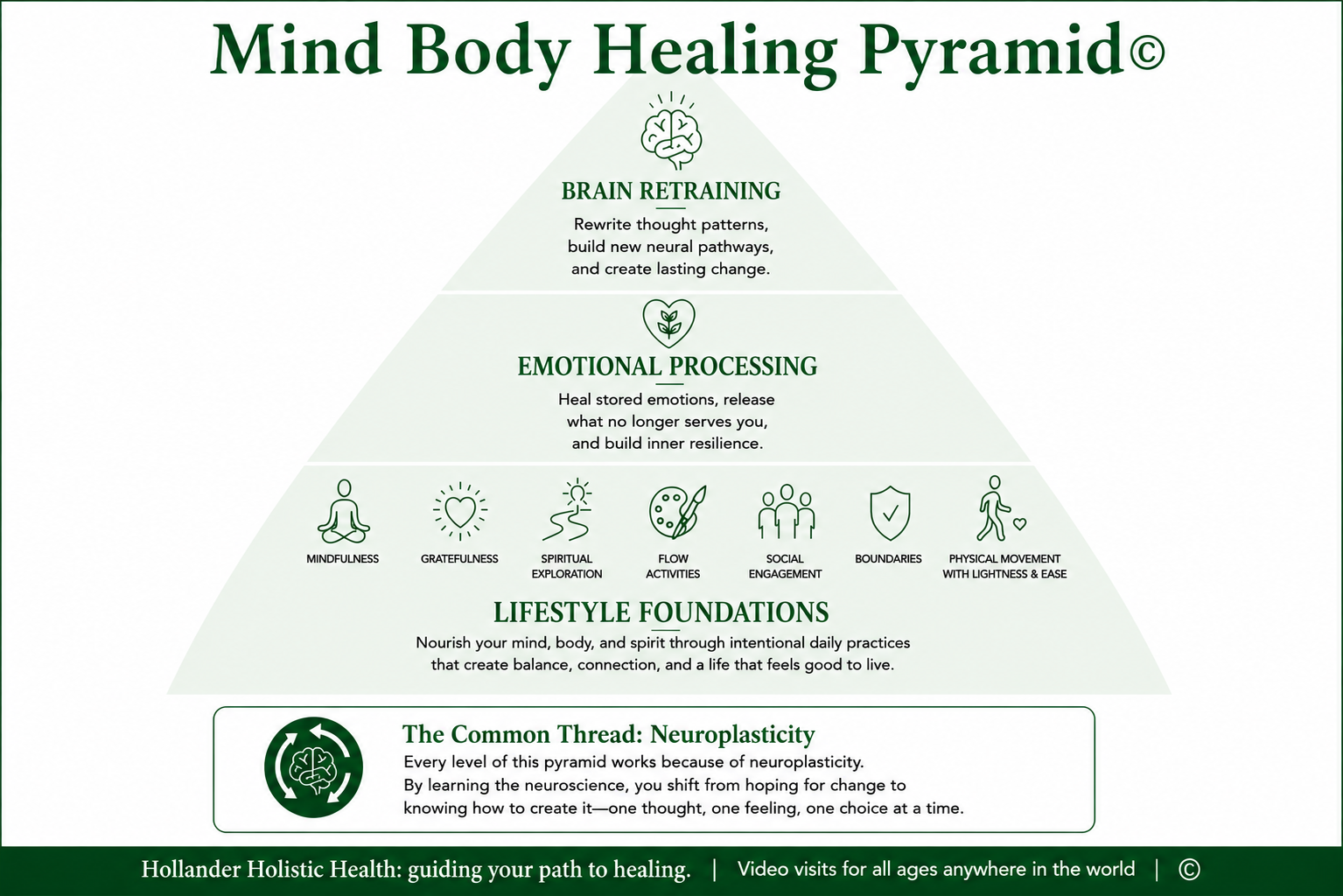
Post #15: The Mind Body Healing Pyramid: an infographic to guide your recovery process
Imagine the keys to your recovery as pieces of a pyramid. Each piece of the pyramid is essential to recover, and each third builds on the piece below. The base of the pyramid lies in building empowerment and nourishing your mind, body, and spirit. The middle third of the pyramid encompasses emotional processing. The pyramid’s top third is your brain retraining (Pain & Symptom Reprocessing) techniques. The common thread is understanding the neuroscience of neuroplasticity. I apply the Mind Body Healing Pyramid to my own recovery story, as I healed from a decade of chronic pain, plus difficulty swallowing, heart palpitations, and weight loss.
by Rachel Hollander, MD, MPH
< 3-minute read

Post #9: The 13 Keys to Neuroplastic Healing: Your Guide to Getting Back to Living
Neuroplastic healing involves self-directed techniques that target the root cause of neuroplastic symptoms: the brain and nervous system. Here are 13 Keys to Neuroplastic Healing: Your Guide to Getting Back to Living.
by Rachel Hollander, MD, MPH
6-min read

Post #4: Rest Allows Space for Healing & Preventing Stress-Related Neuroplastic Symptoms
Sleep is not the only form of rest. Daytime rest should be valued as well, through meditation, slowing down, mindfulness, and flow experiences. Even creating separation and asserting boundaries are forms of rest. Rest is a need, not an indulgence. It allows space for healing and preventing stress-related neuroplastic symptoms through observation, contemplation, and connecting with intuition. Complete with wisdom teachings and personal anecdotes.
by Rachel Hollander, MD, MPH
5 min read